

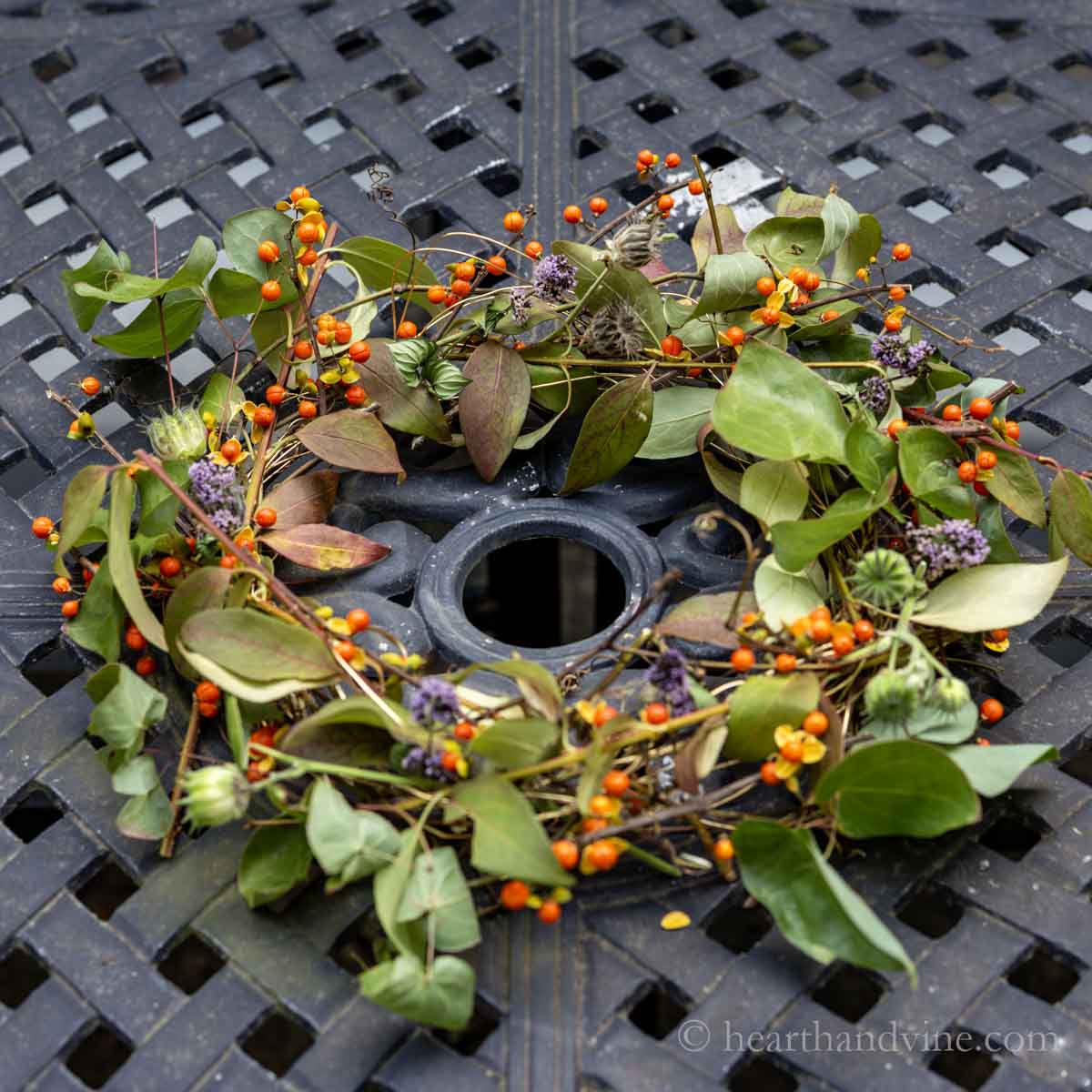
This DIY foraged floral arrangement project will show you how to create a beautiful centerpiece with fresh cut items from the garden or nearby.
If you have been following me, then you know one of my favorite things is creating with nature, natural elements, and botanicals.
Today I'm sharing how I made this pretty fall arrangement table wreath from foraged items, which will last for days, even weeks. This is good to know, so when you are planning a party, you can get a jump start on your decorating well before the day of the event.
Foraged Foliage Decorating
When creating a beautiful arrangement like this, you are not using a vase, so there is no water source. How do you know if the plants will hold up for even a day in advance?
Out of Water Test
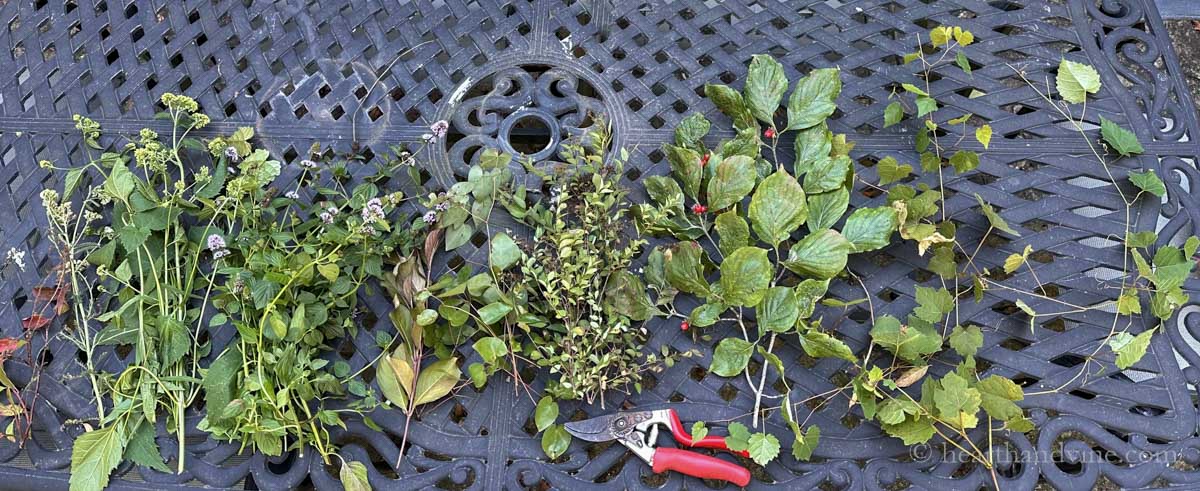
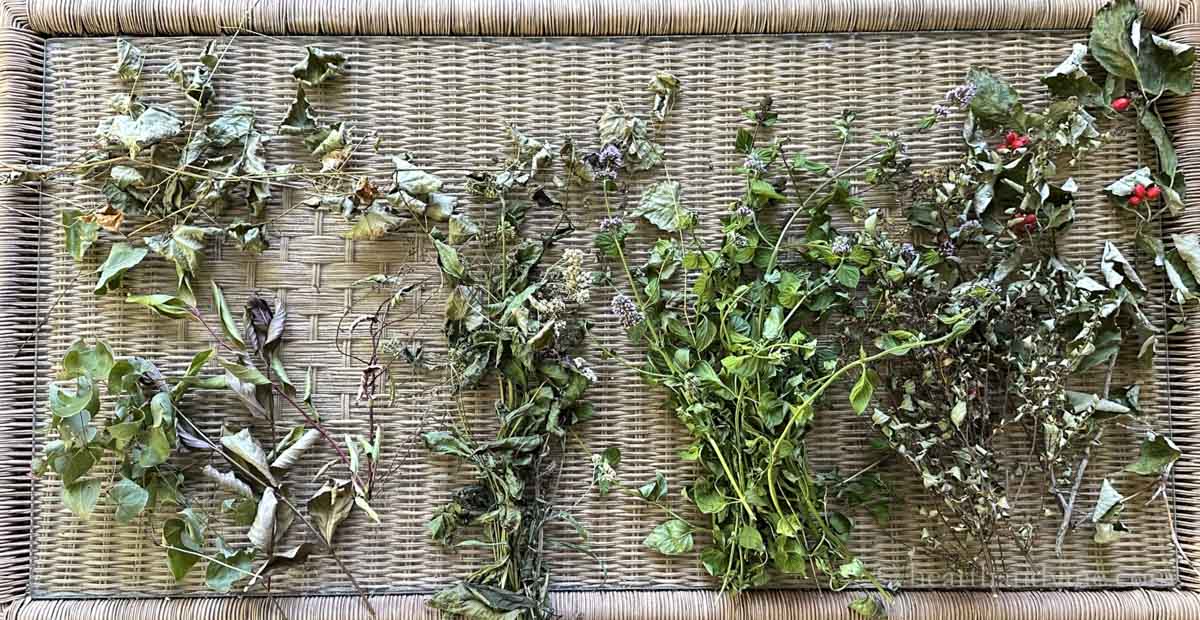
Take a look around your landscape and perform an "out of water test." Simply cut some plant material, set it out for a day or two, and see what happens. As you can see, I cut several branches from different plants above. I even cut some weeds.
After two days, you can see that some of them still look pretty good. In some cases, the berries or flowers (purple mint flowers) look good but the foliage does not. The epimedium (left corner), though curly, held up well too.
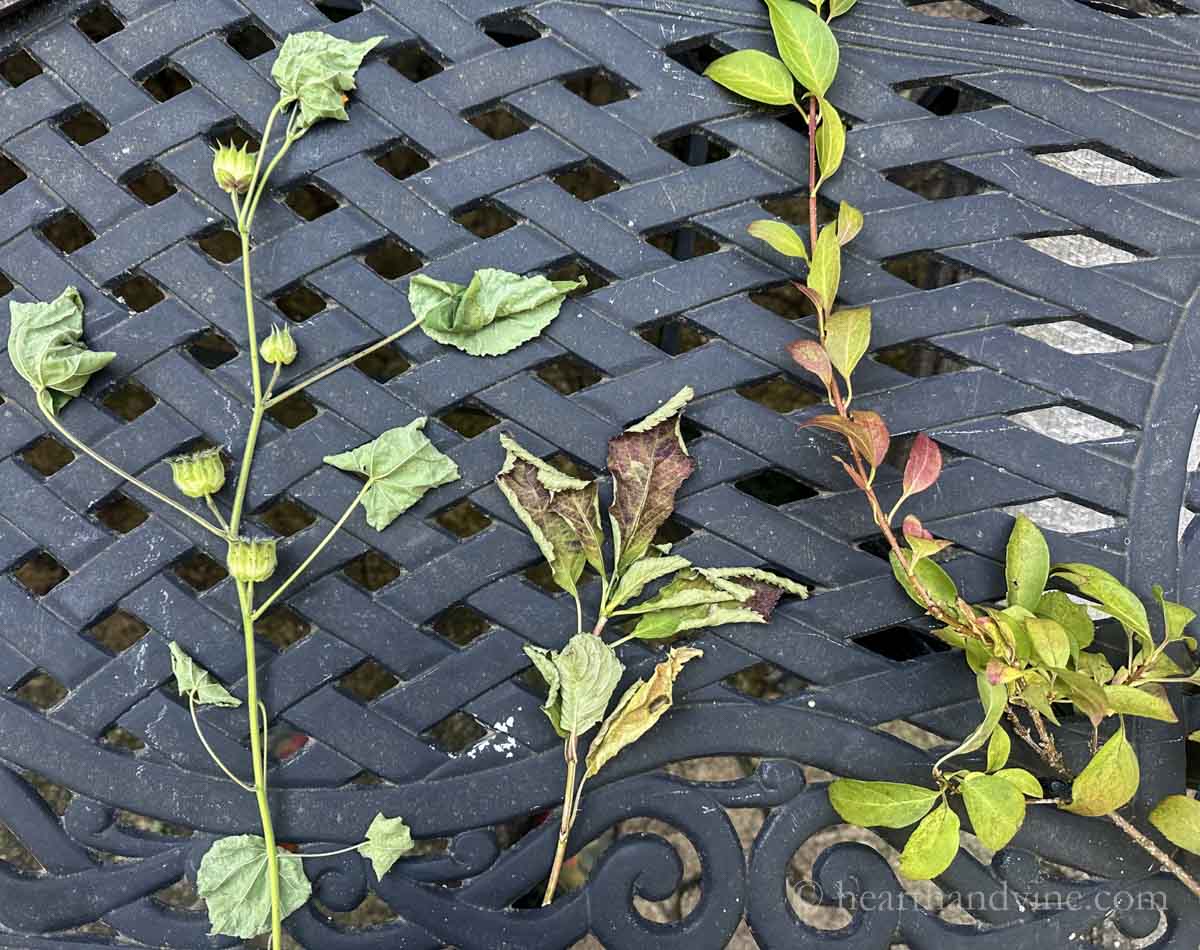
I also cut some velvet leaf (a weed here), some pretty fall hydrangea leaves, and some forsythia stems. The pods on the velvet leaf will add great texture and interest. The hydrangea is a fail and will not hold up. However, the forsythia stayed unchanged, and some of the leaves are a pretty red apple color this time of year.

Be the first to receive new posts and get access to our Subscribers Only Page.
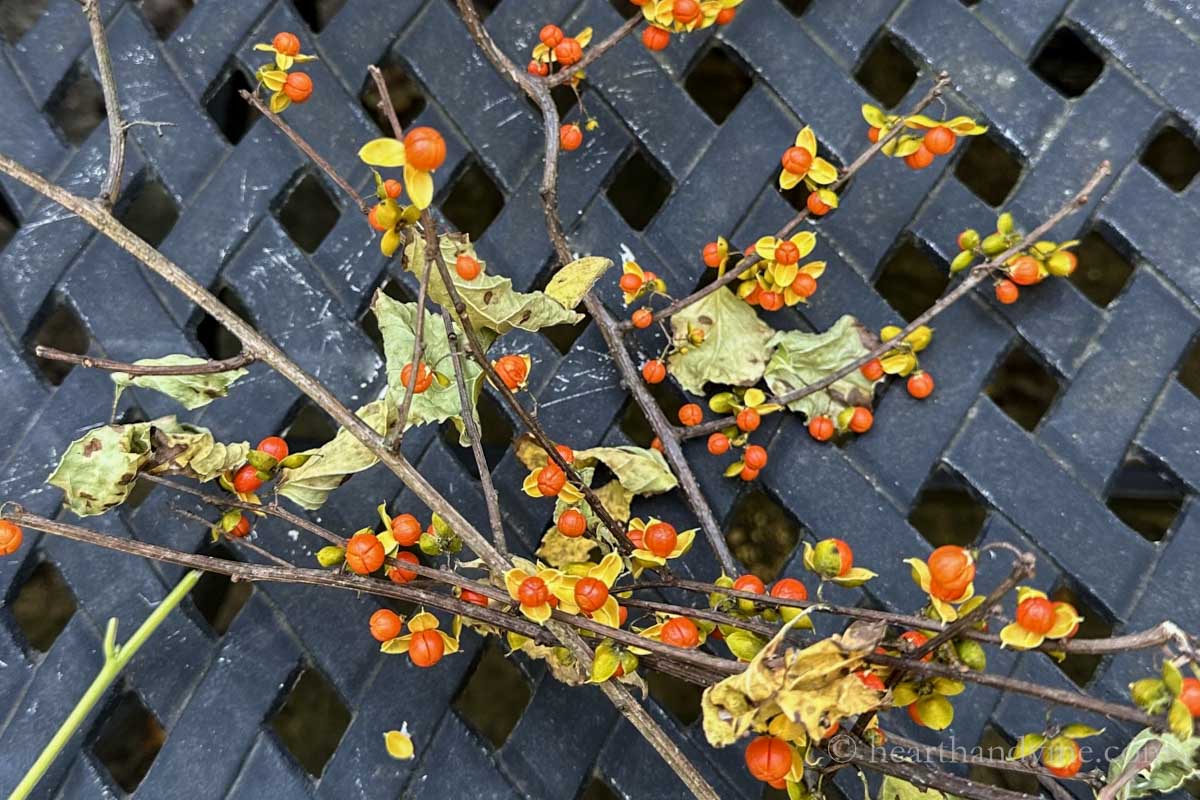
Lastly, my brother-in-law cut some lovely bittersweet vine on a bike ride, and it's always a favorite of mine in the fall. Greenery and foraged flowers can be found anywhere.
Note: Always ask permission when cutting plant material on others' property.
More Long Lasting Plant Ideas
- Eucalyptus
- Wisteria
- Small tree branches like oak
- Honeysuckle
- Rosemary
- Strawflowers, Statice
- Lavender
How to Make a Foraged Centerpiece
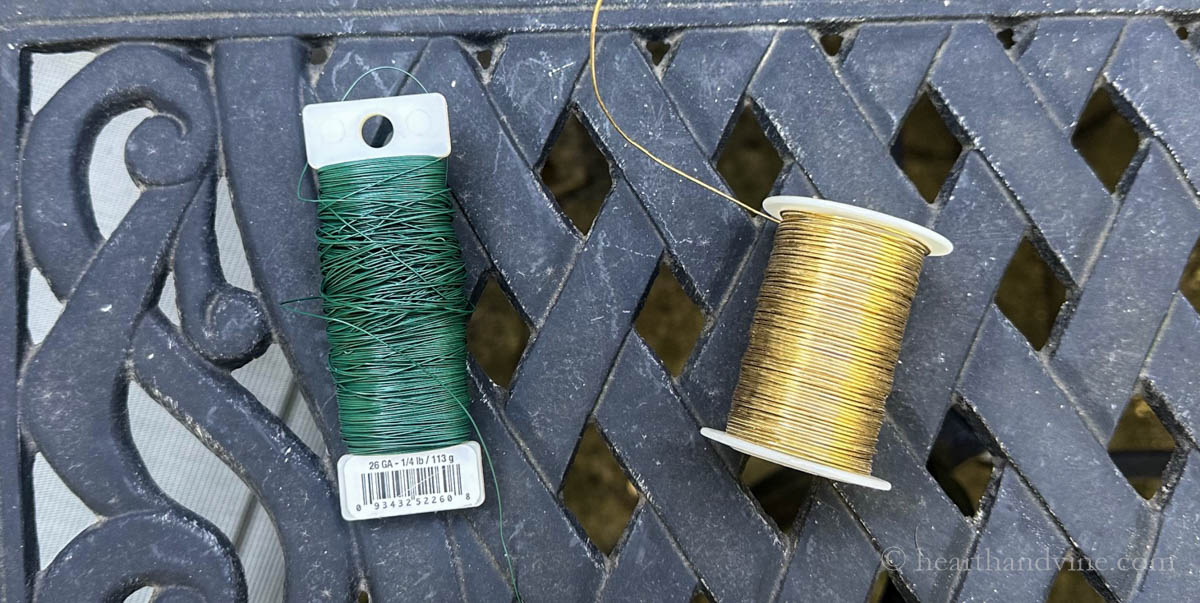
Step 1. Start with some wire. Green floral wire will work, but you need one that is heavy. The one I have is 26 gauge, and you would want something like a 20 gauge for this project. The gold wire is much heavier, so that's what I used.
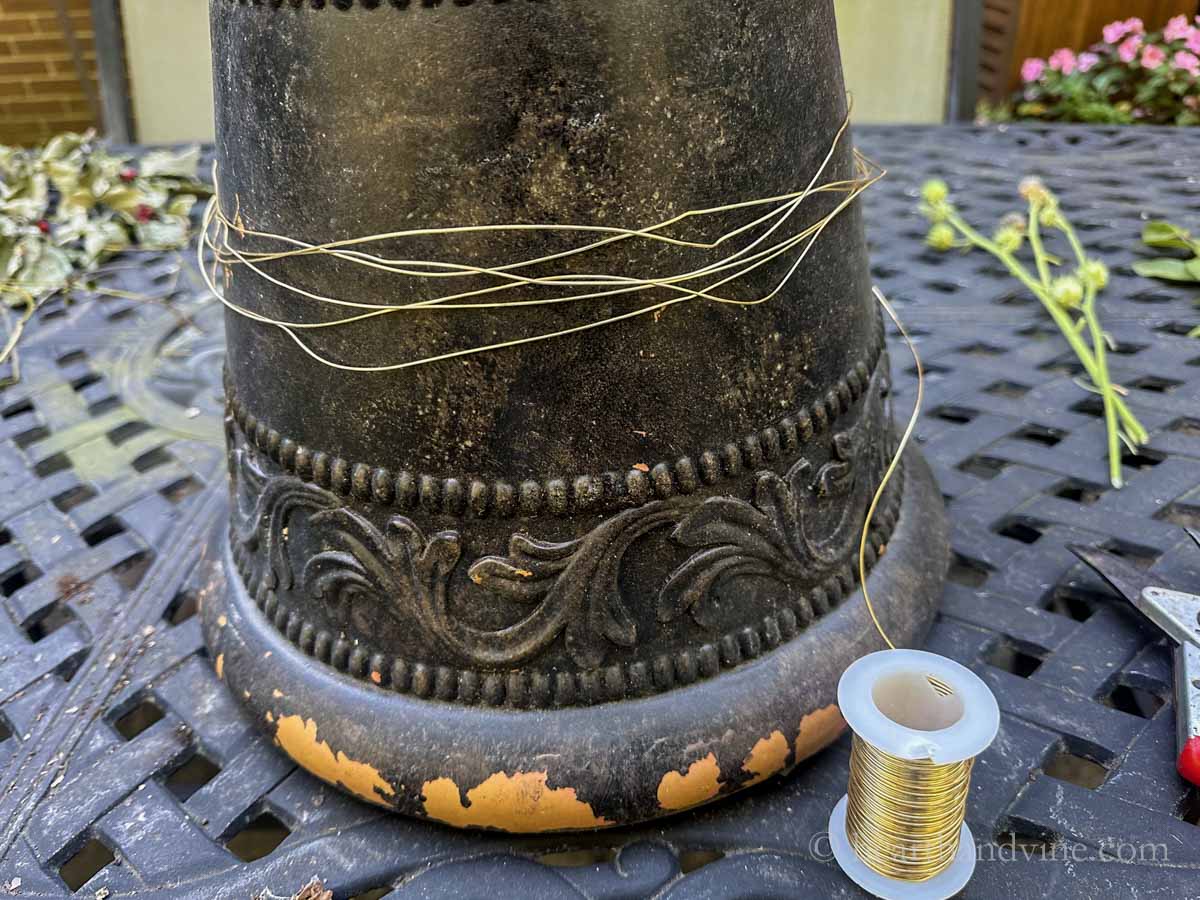
Wrap the wire several times around a pot or bucket that's close to the size you want to create.
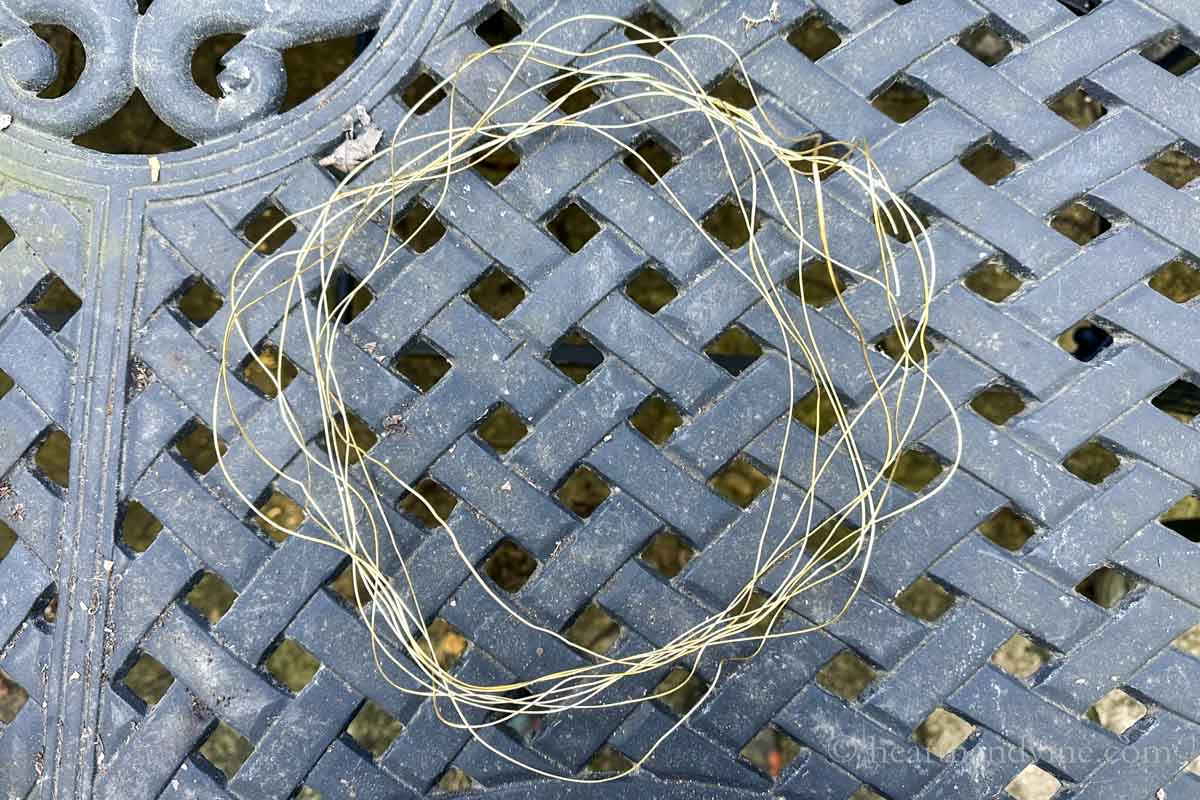
Step 2. Pull the wire off the pot and play around with it to give it a nice free form.
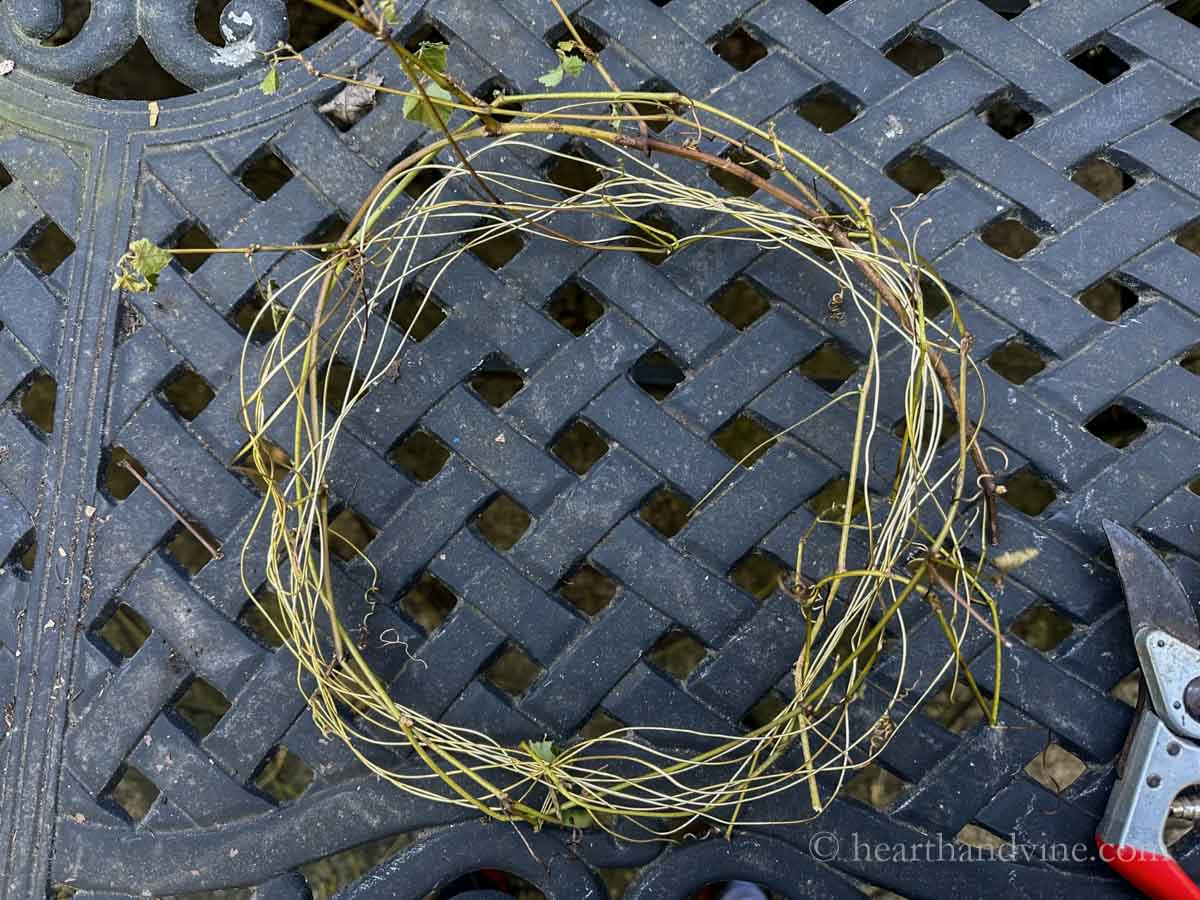
Step 3. Start adding your plant materials. I always have grapevines growing around me, so I added lots of them, wrapping it over and under the wires.
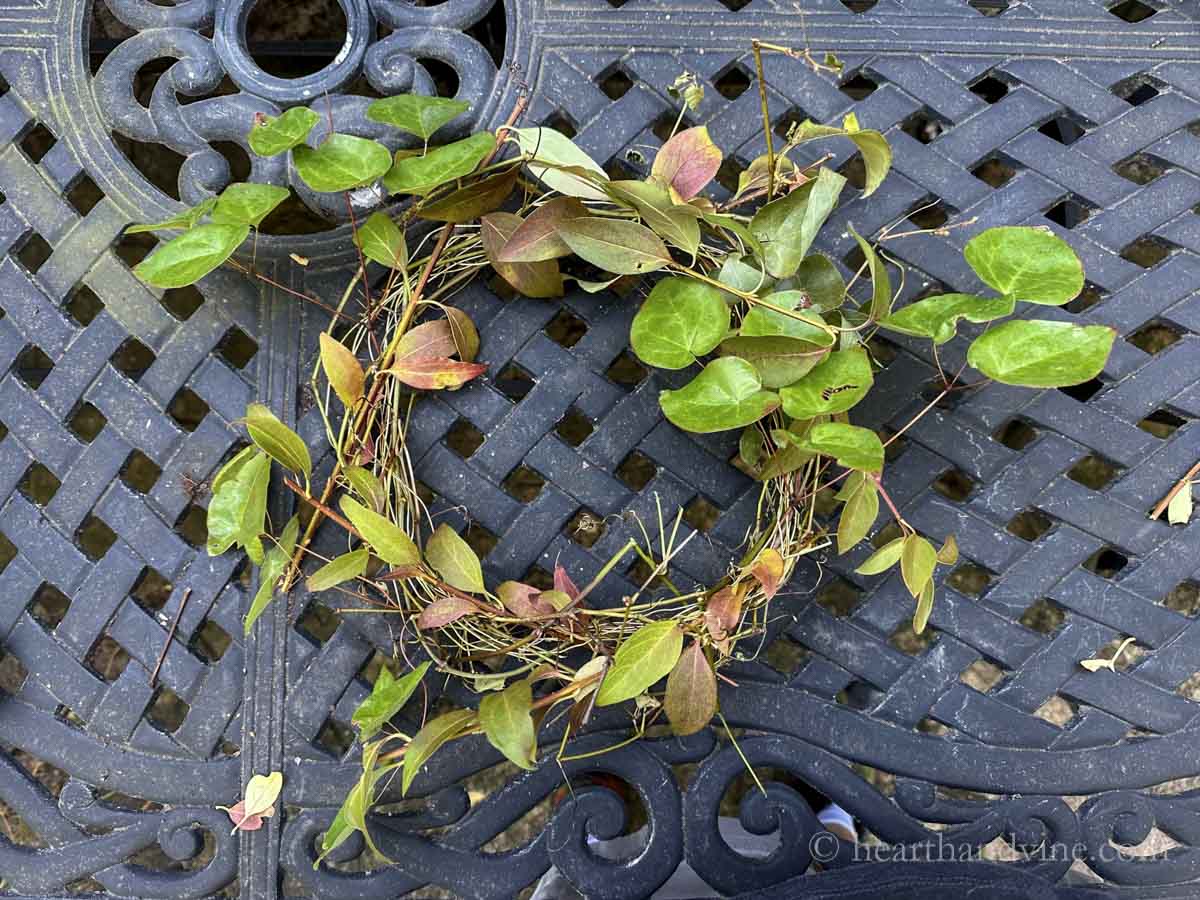
Step 4. Next, add bigger or heavier pieces. In this case, I used some forsythia branches and epimedium.
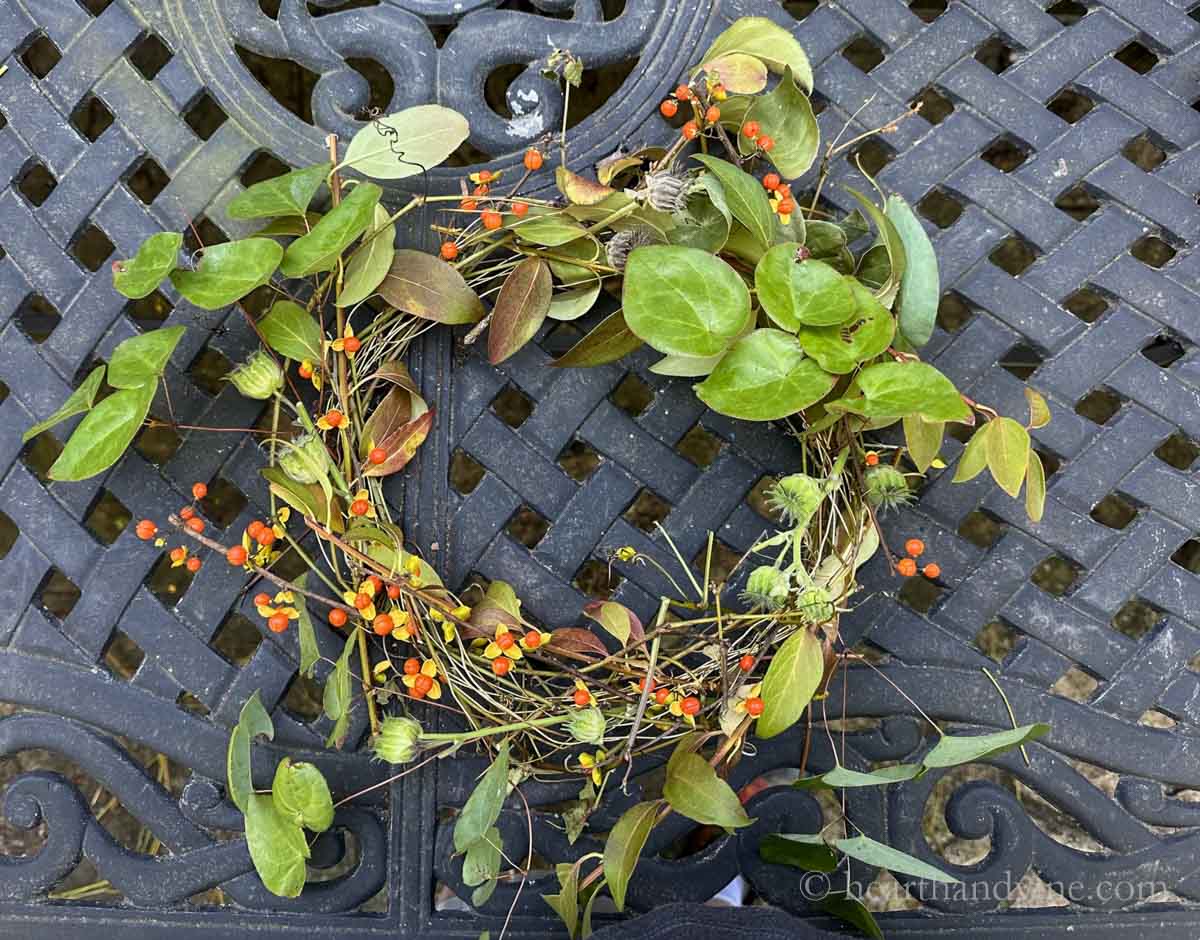
Step 5. Continue adding plant material that is smaller and/or more delicate. Here I added the bittersweet vine and the pods from the velvet leaf plant.
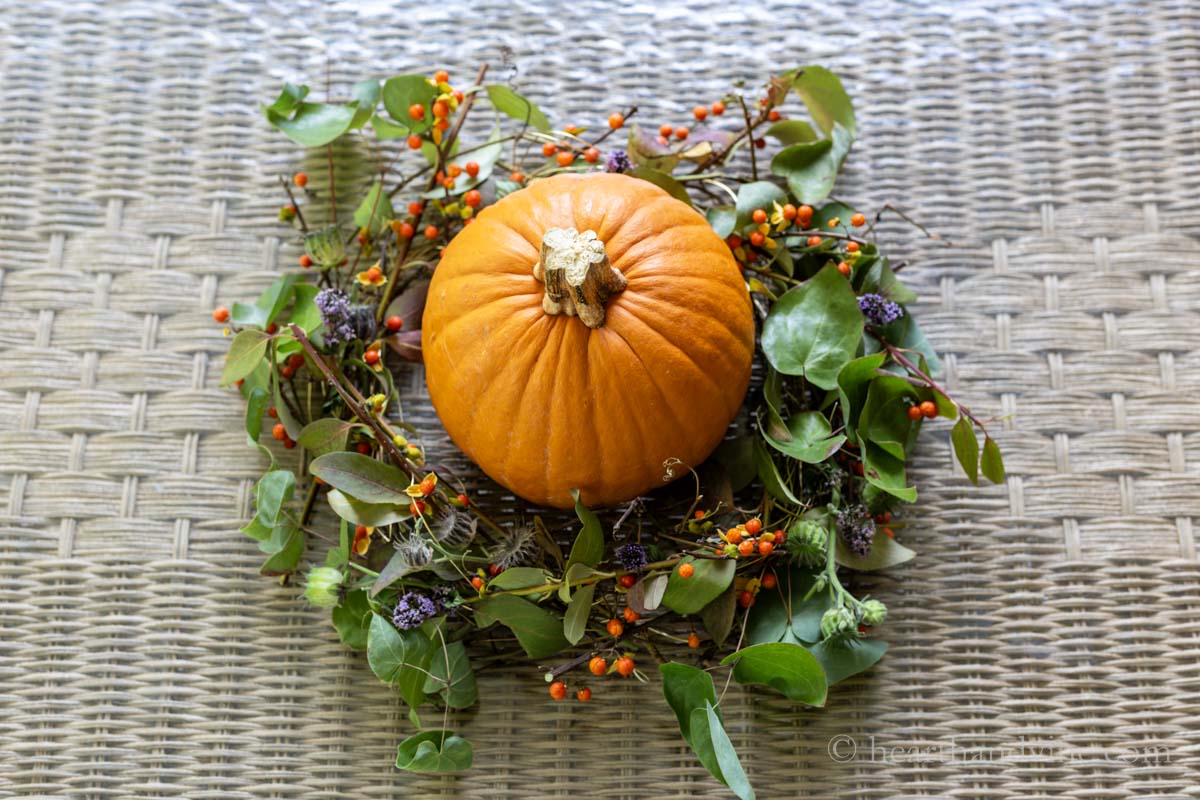
Step 6. Step back and fill in as needed. I added a few mint flowers. The purple color contrasted nicely with the red orange bittersweet berries. A small pumpkin was added to the center. You could also use a big pillar candle here.
Tips: Think outside the box when creating your floral arrangement and or bouquets. Try interesting weeds or wildflowers found on the roadsides, like queen anne's lace. There's a reason they are considered weeds. They are often very hardy. Also, try using pretty seed heads from spent flowers in the garden. There are no rules. You can even pop in some artificial material if you like.
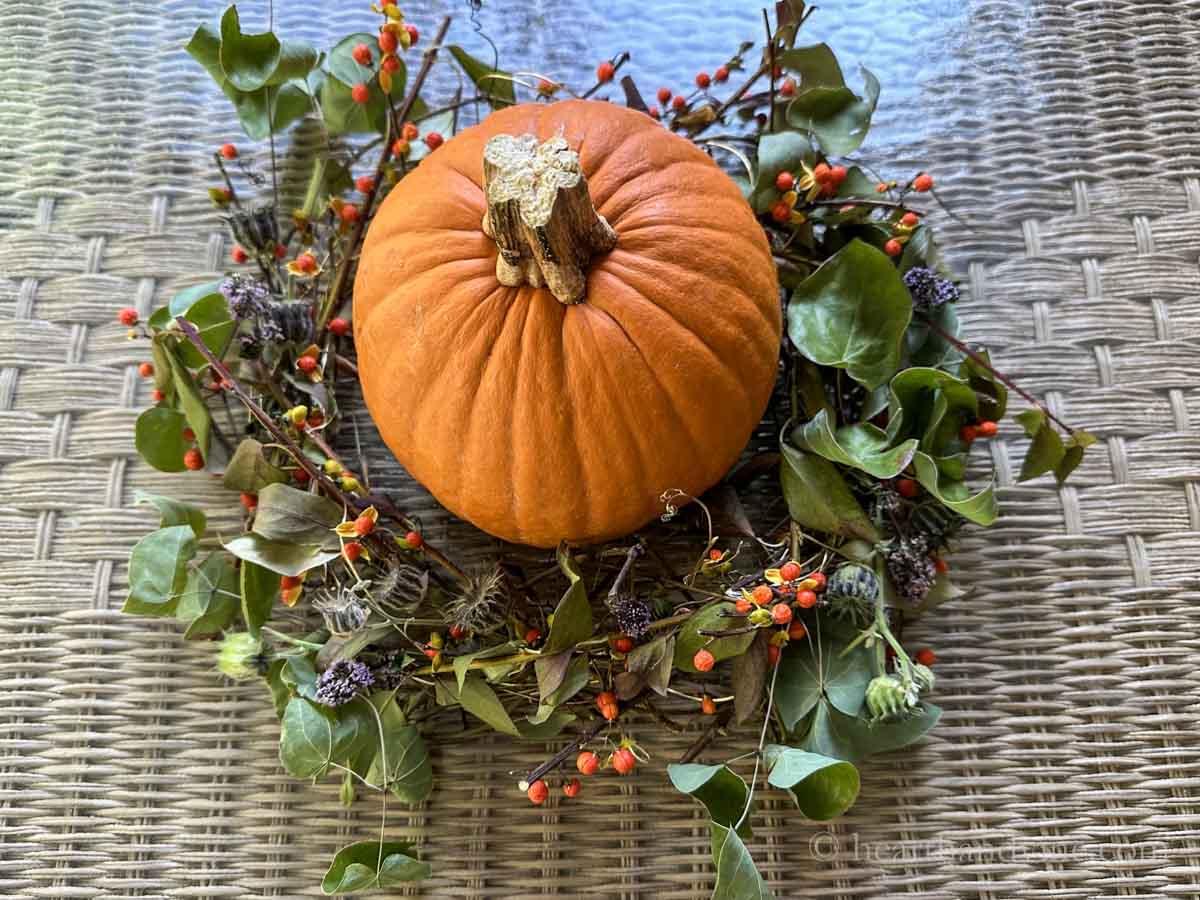
Here's a shot of the same arrangement one week later. The pods have darkened a little (I like that effect), and the epimedium is curled a little but not really wilted. Forsythia leaves wilted the most, but still added a little color to this lovely foraged arrangement.
I love the way it looks, and I think it will continue to hold up for another week, maybe longer.

Leave a Reply