


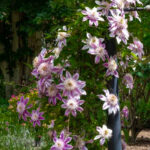
If you love flower gardening, then you should be growing clematis. This lovely flowering vine can easily be grown in a wide range of climates, comes in a variety of shapes and colors, and comes back every year.
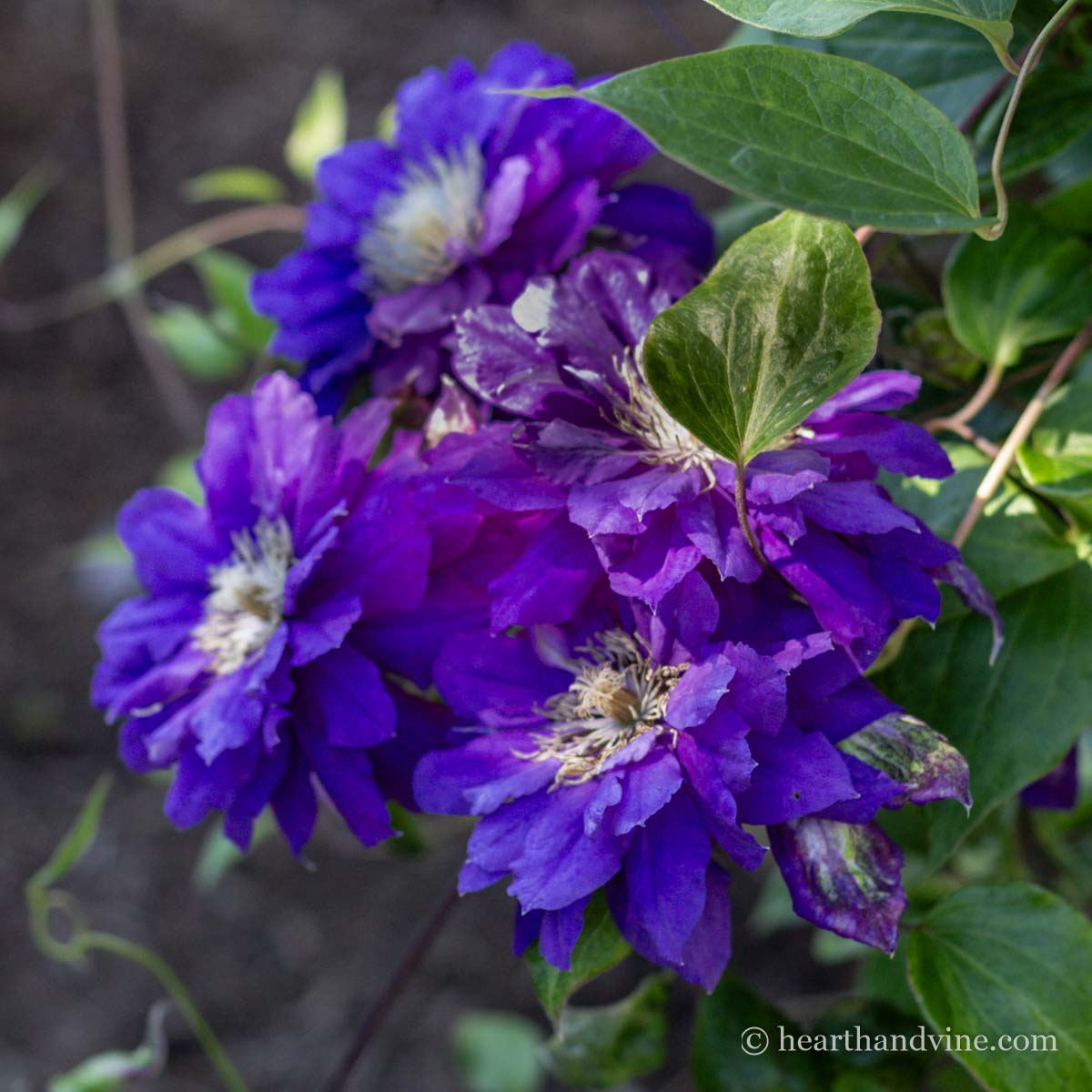
Clematis are wonderful investments for the garden as they are easy to grow and are hardy perennial vines. I've been growing a few for many years without any problems.
You can find clematis vines at any nursery or big box store, and there are hundreds to choose from, with more and more hybrids being developed each year. Some of the newest are more compact, making them more container friendly, and often boast long bloom times.
More Great Perennial Plants: Begonia Grandis.....Echinacea purpurea.....Hardy Geraniums
How do You Pronounce Clematis?
I like to say “KLEM-uh-tis.” However, many people say “clem-MAT-is.” Both are correct. Tomayto, tomahto.
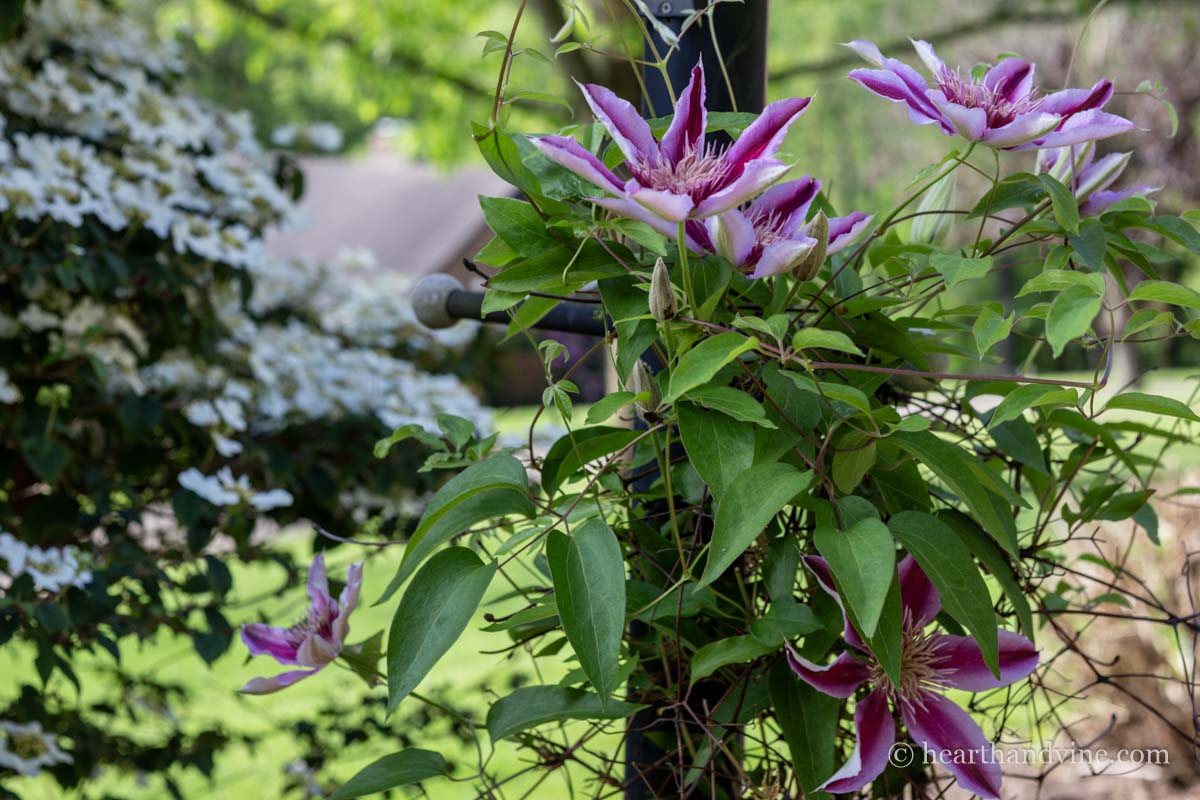
Growing Clematis
The Basics
- Scientific Name: Clematis is a genus with around 400 species of the Ranunculaceae family
- Plant Type: Hardy Perennial Flowering Vine
- USDA Zones: 3 - 9 Find Your Zone Here
- Sun Requirements: Full Sun to Partial Shade, especially in the afternoon.
- Water Requirements: Average, however, this plant benefits from shaded roots, so a thick layer of mulch is helpful.
- Support: Most clematis are climbers that require vertical support. You can use a trellis, pergola, arbor, or a lamp post with the help of some netting or twine to get it established.
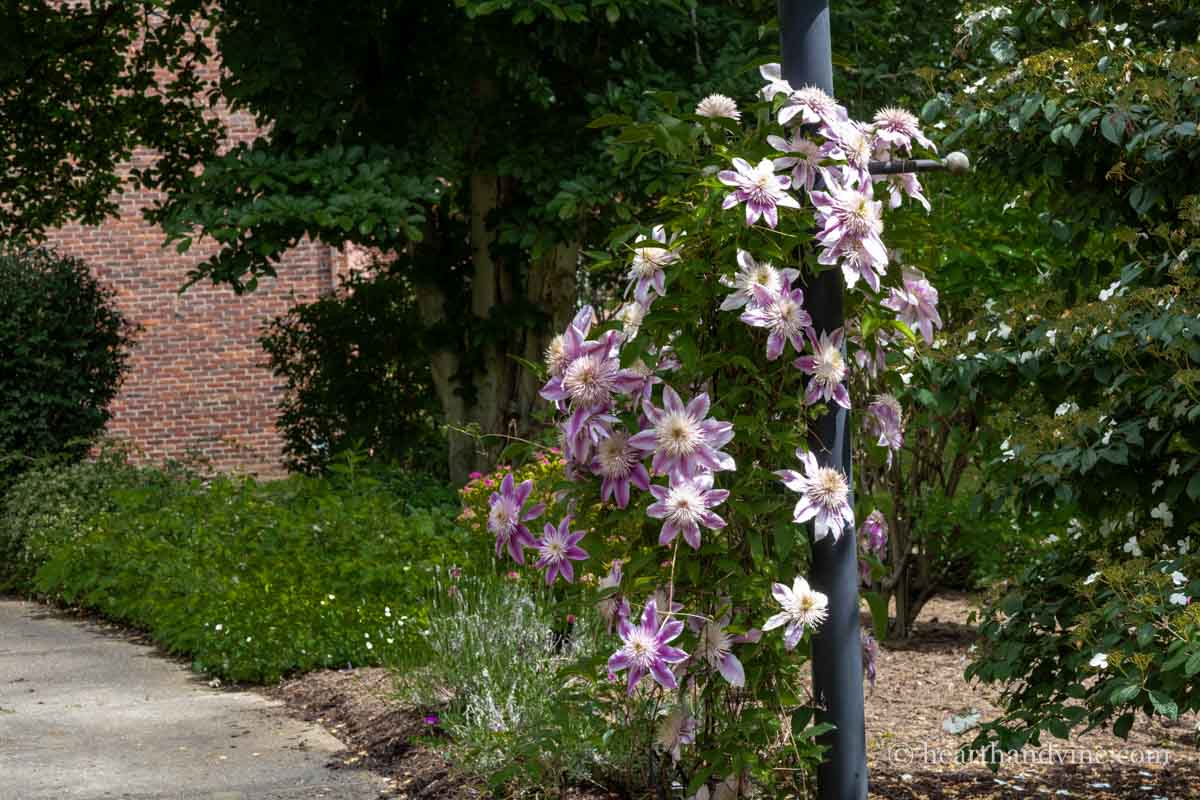
Planting Clematis
Plant clematis deeply, in a hole that is deeper and at least twice as wide as the nursery pot it came in. Fill with a mix of compost and the native soil you dug up. Place a thick layer of mulch around the plant and water well. Continue to water the plant every couple of days until you get a good rainfall for the first year. At this point, you can also trim the top growth back to give the roots a chance to establish.
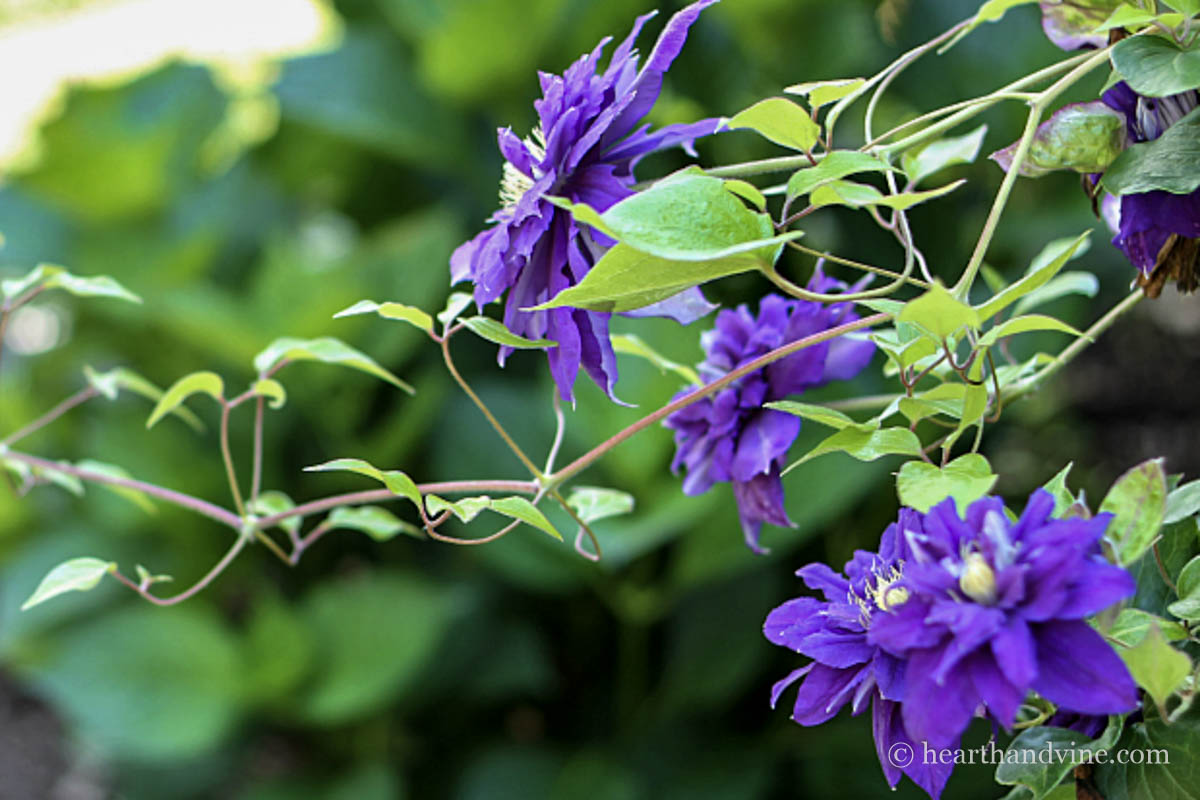
Pruning Clematis
Similar to hydrangea flowers, it's best to know if your clematis falls into one of these three categories.
Type 1 - Blooms on Old Wood. This type does not need pruning. If you want to shape it, wait until after it flowers.
Type 2 - Blooms on Old and New Wood. These clematis varieties bloom in the spring and sometimes again in late summer. The best time to prune this type of clematis is in late winter or early spring. Though it may not need any pruning, make sure to prune and shape it before buds show up in the spring.
Type 3 - Blooms on New Wood. Clematis that bloom on new wood are typically those that don't start blooming until mid-summer. You can feel free to prune this one more heavily in the spring to encourage full growth.
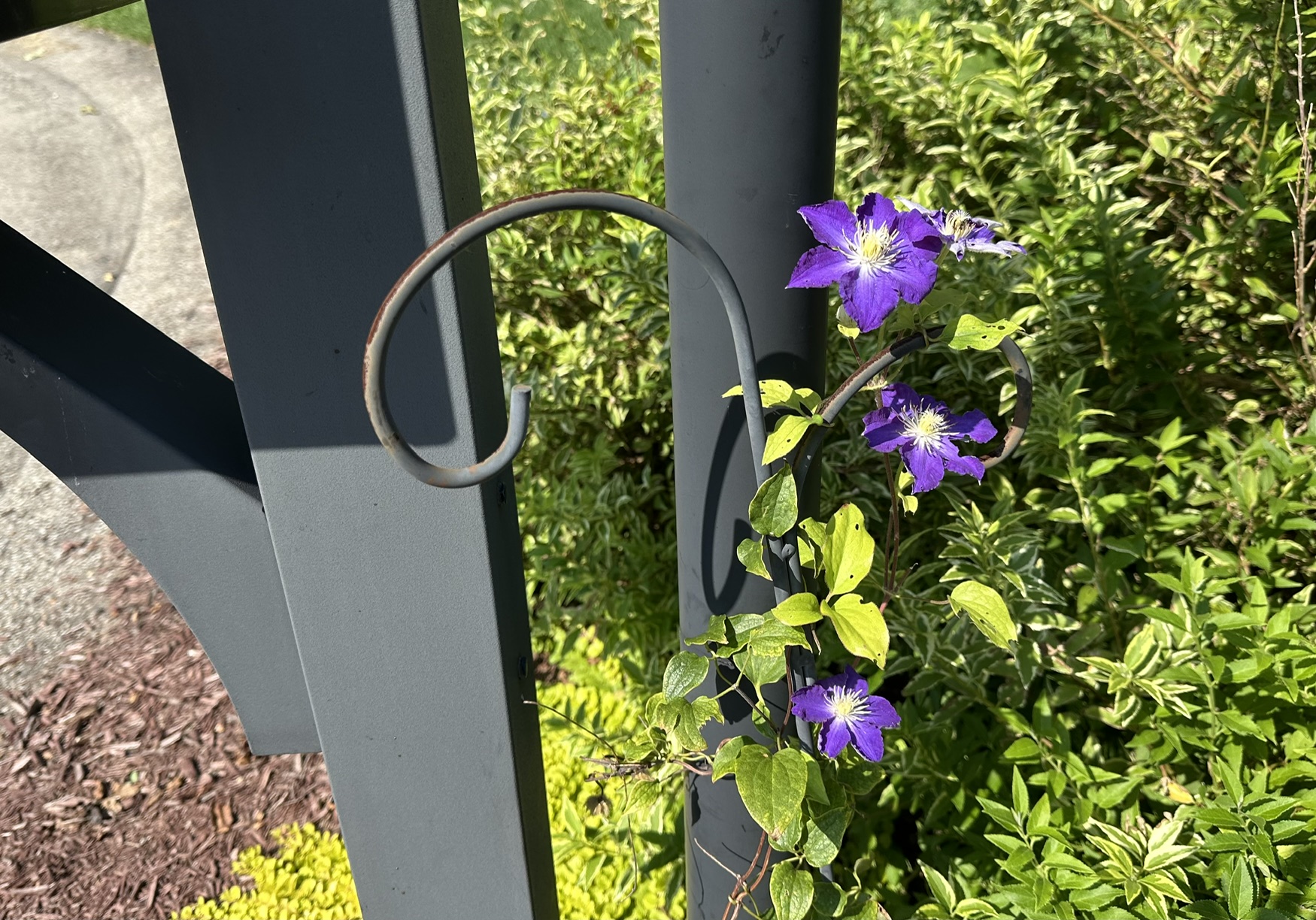
If you are worried about growing clematis, don't be. They are one of the easiest plants to try and are almost guaranteed to flourish.

Leave a Reply