



Learn about harvesting lavender, when and how to cut it, and then dry it for all your favorite crafting and cooking ideas.
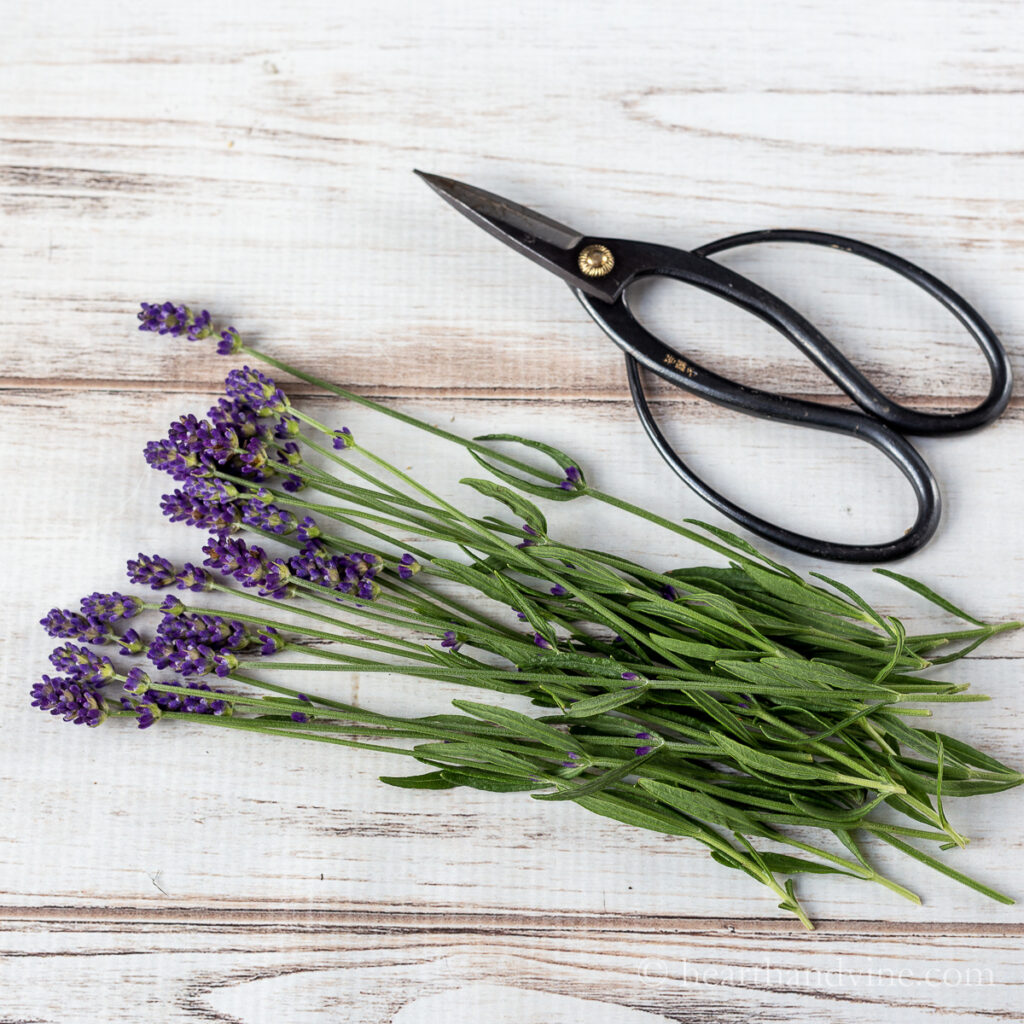
Lavender plants are one of my favorite herbs in the garden. It's pretty easy to grow in my USDA zone 6a garden and is said to be hardy in climates from zones 4 - 10. A woody shrub with beautiful scented flowers and leaves that bloom for long periods year after year. It grows best in direct sunlight with good drainage. In addition, Lavender is loved by butterflies, bees, and other pollinators, but deer and other rodents leave it alone.
However, the thing I love about lavender is that it can be used in so many ways. From tinctures to salves, dried lavender flowers can also be used in the kitchen to add fragrance and flavor to sugar for baked goods, and can be pressed for candles, used in wreaths, and other beautiful crafts.
More Lavender Ideas: Cooking with Lavender.....Herbal Dream Pillows.....Pressed Flower Luminaria
Lavender Varieties
There are many different types of lavender. The one I love growing the most is Lavandula angustifolia 'Hidcote'. This is an English lavender with a beautiful scent and pretty dark purple flower buds. The variety 'Munstead' is also a good English variety to grow and harvest. French lavender is beautiful but harder to grow in my climate. I keep some in my dining room, but it doesn't produce as many flowers as the English lavender plants in the garden. The same is true with Spanish lavender, which is also not cold hardy in my area.
When to Harvest Lavender
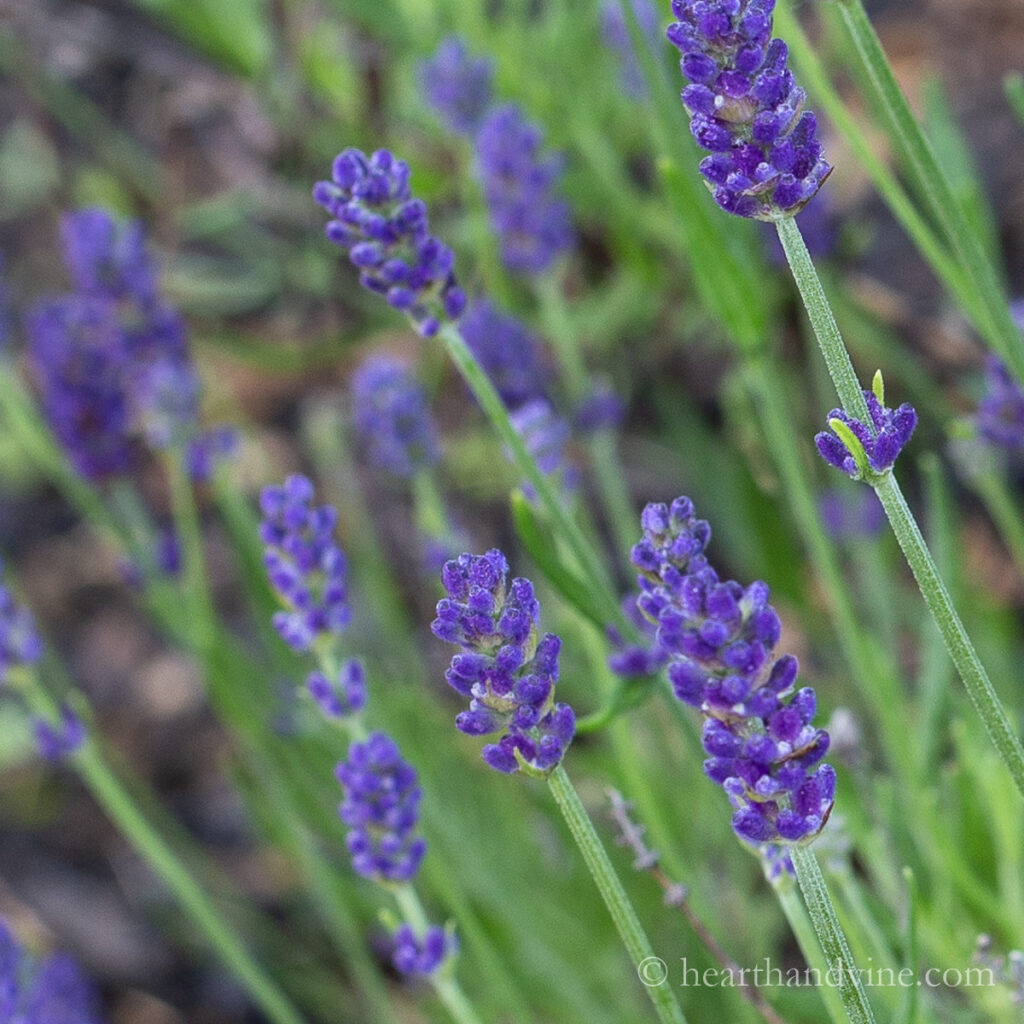
The best time to harvest lavender is in the spring or early summer when the flower buds are still tight, and their essential oils are at their peak. (see image above)
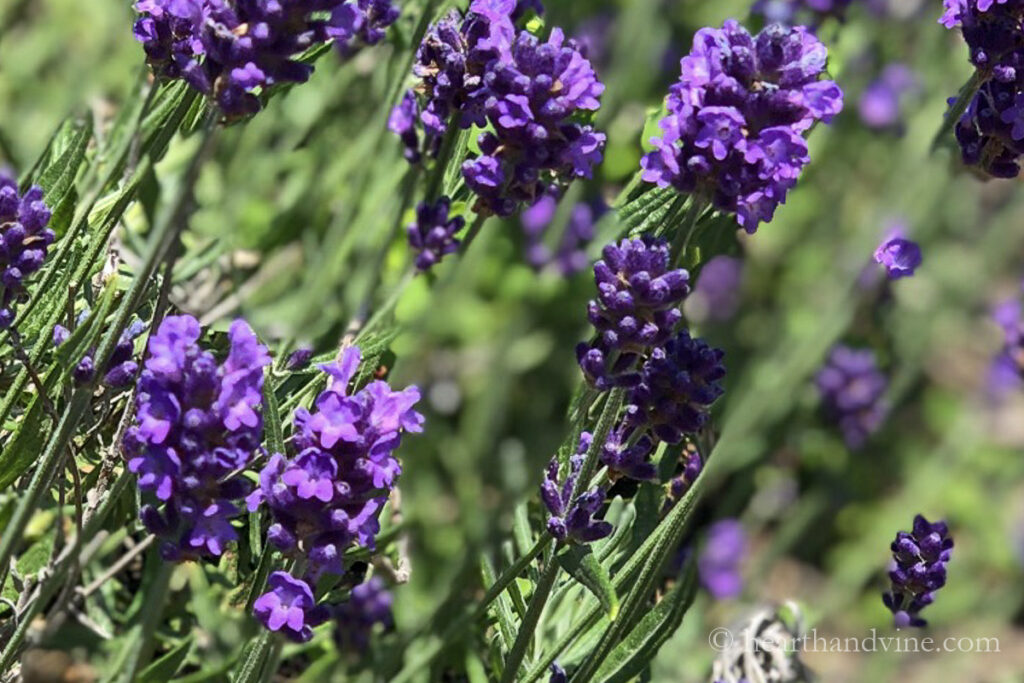
Don't wait to harvest lavender when the buds burst open in full bloom like those shown above.
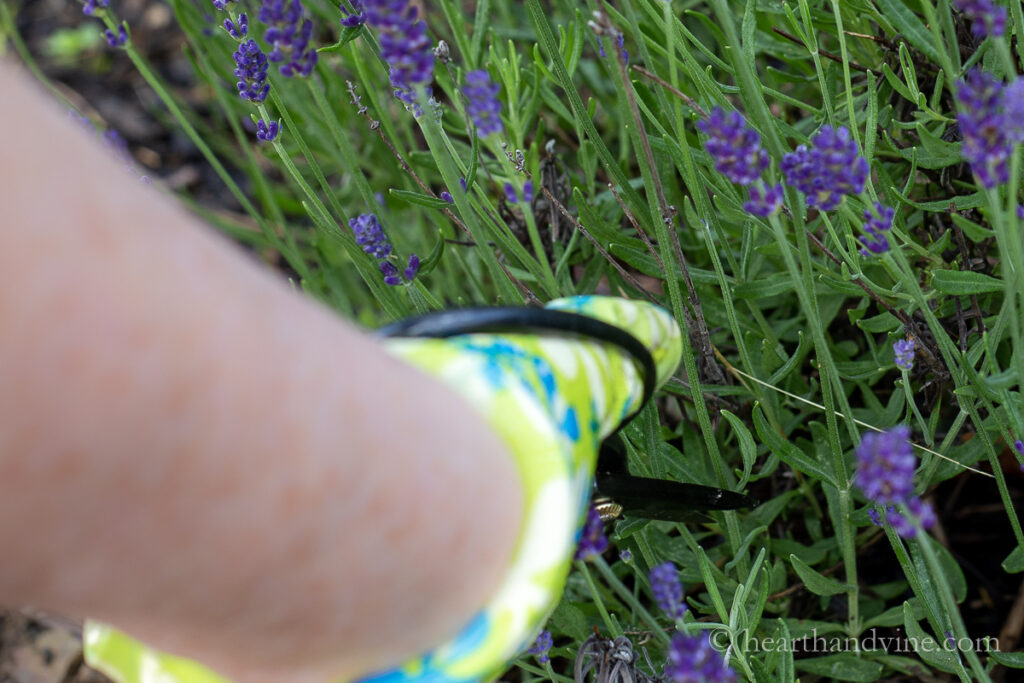
Harvest stems in the early morning after the dew has dried. Don't wait until the high heat in the afternoon. Using clean shears or sharp pruners, cut the stem close to the bottom on the green growth but not into the thicker woody part of the plant.
How to Dry Lavender
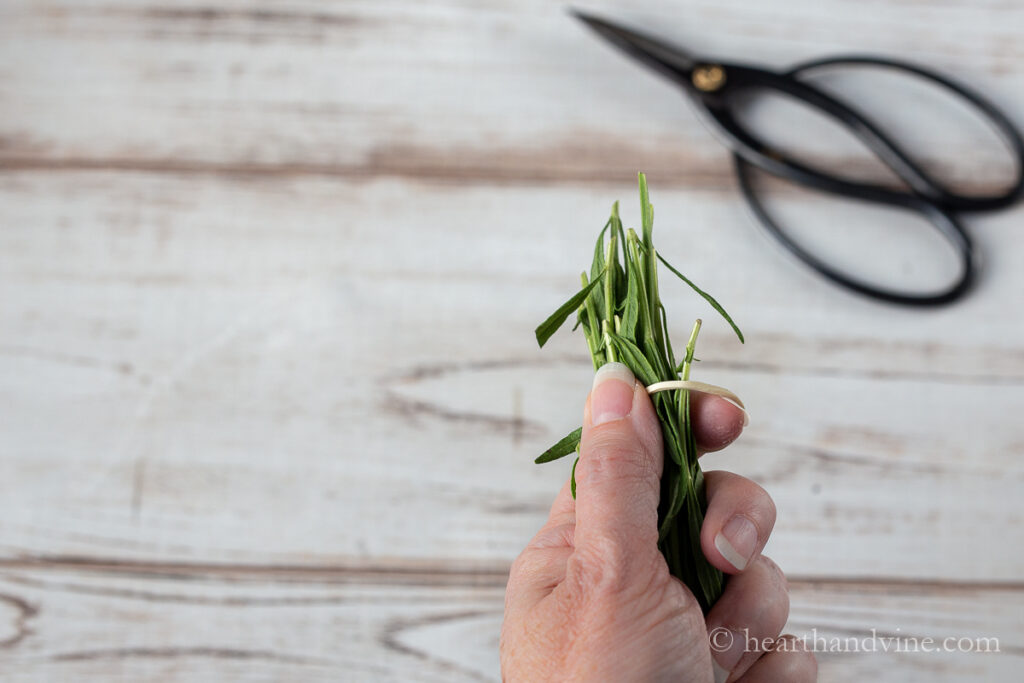
Bundle 12 - 15 stems of relatively equal length and use a rubber band at the bottom to secure them together. A rubber band works best because as the plant material dries, it will slightly shrink. If you use string or twine, the stems may slip through, but the rubber band will adjust to hold the stems together.
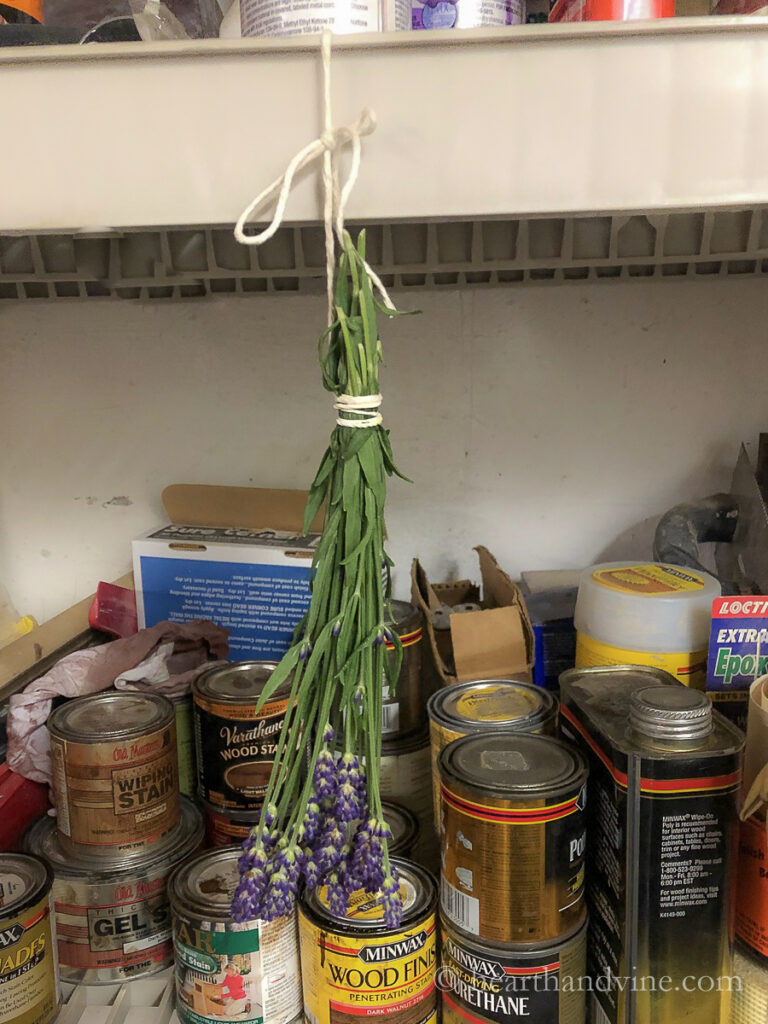
Hang your bundles in a cool dark place that has good airflow. I tie them onto a shelving unit in our basement.
Depending on the humidity and heat of your house, the drying process should take about 10 days to 2 weeks to dry. You will know they are dry when the stems are crispy and easy to break.
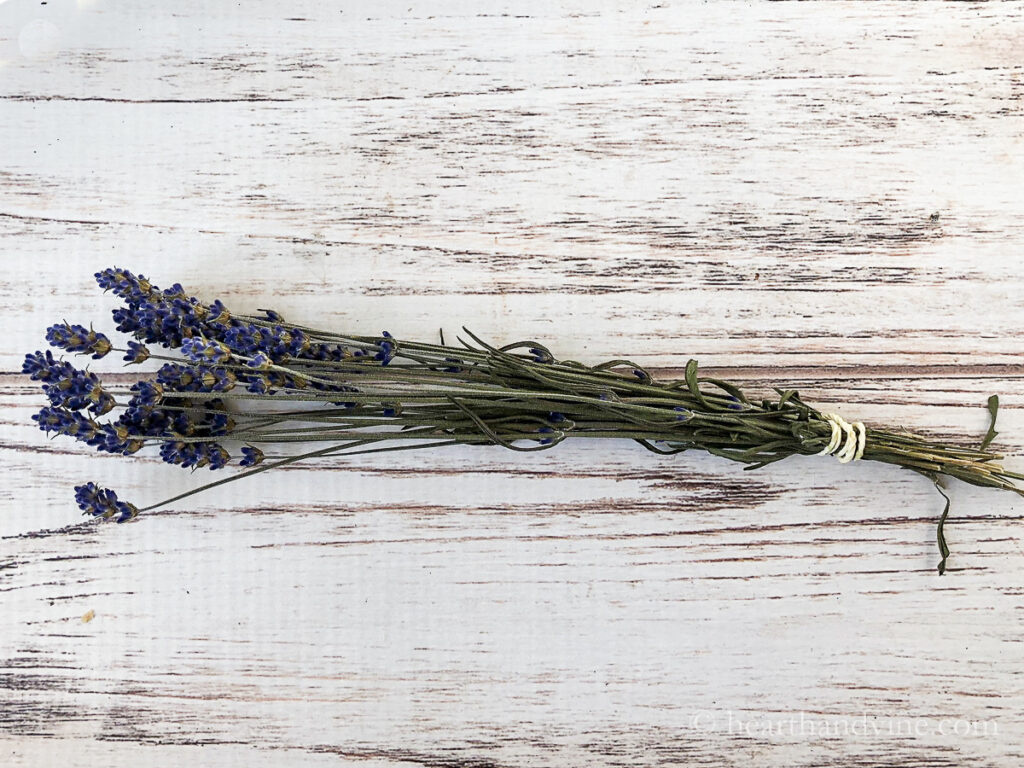
Then you can go to town creating candles, or any number of lavender crafts. Make a few lavender sachets to place in your drawers or closet. You can also strip off the lavender buds and place them into an airtight container. You can keep this in your pantry for a variety of culinary uses such as creating a simple syrup, lavender cookies, lavender honey, or other yummy lavender treats.
So if you are growing lavender or know someone who does, try harvesting and drying some. It's really easy, and you'll be glad you did.

How to Harvest and Dry Lavender
Equipment
- Floral or pruning shears
Materials
- Rubber band
- String or twine
Instructions
- Cut lavender early before the heat of the day rises in the morning, after the dew has dried off, with sharp pruners for a clean cut.
- Be sure to cut the flowers that have closed buds only.
- Reach down and cut the stems an inch or two from the base of the green growth.
- Lightly rinse and dry the flowers.
- Wrap a rubber band around the bottom until tight.
- Tie a piece of string on the bottom and hang the bunch somewhere upside down in a cool, dark space with good airflow.
- Remove and keep for crafting or gently remove the buds and place them in an airtight container to use for cooking.
Cindy B
I enjoy making a lavender rinse for my laundry. After removing the buds, I put the stems in white vinegar to infuse. Strain out the stems after a week or so, then a fragrant laundry rinse remains.
Patti Estep
Cindy, that's an excellent idea! Thanks for sharing.